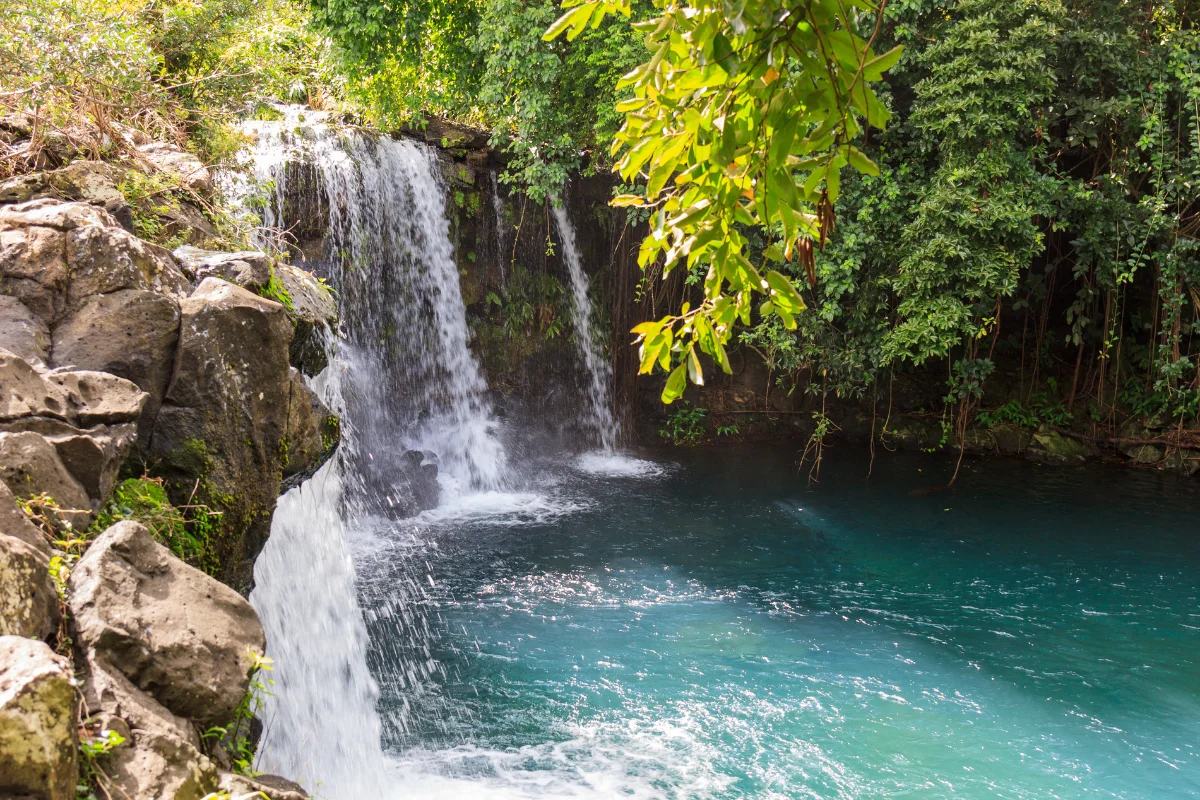
A chain of small waterfalls and startlingly blue pools hidden in the cane fields near Cluny — unsignposted, unfenced and, for those who find it, one of the finest swimming spots on the island.
REGION
Cluny, Grand Port (South East)
BEST TIME
Dry season, May to November; morning light
ENTRY
Free – no gate or ticket
TIME NEEDED
1 to 2 hours
Why It's Worth the Trip
Water the colour of glass, hidden behind the cane.
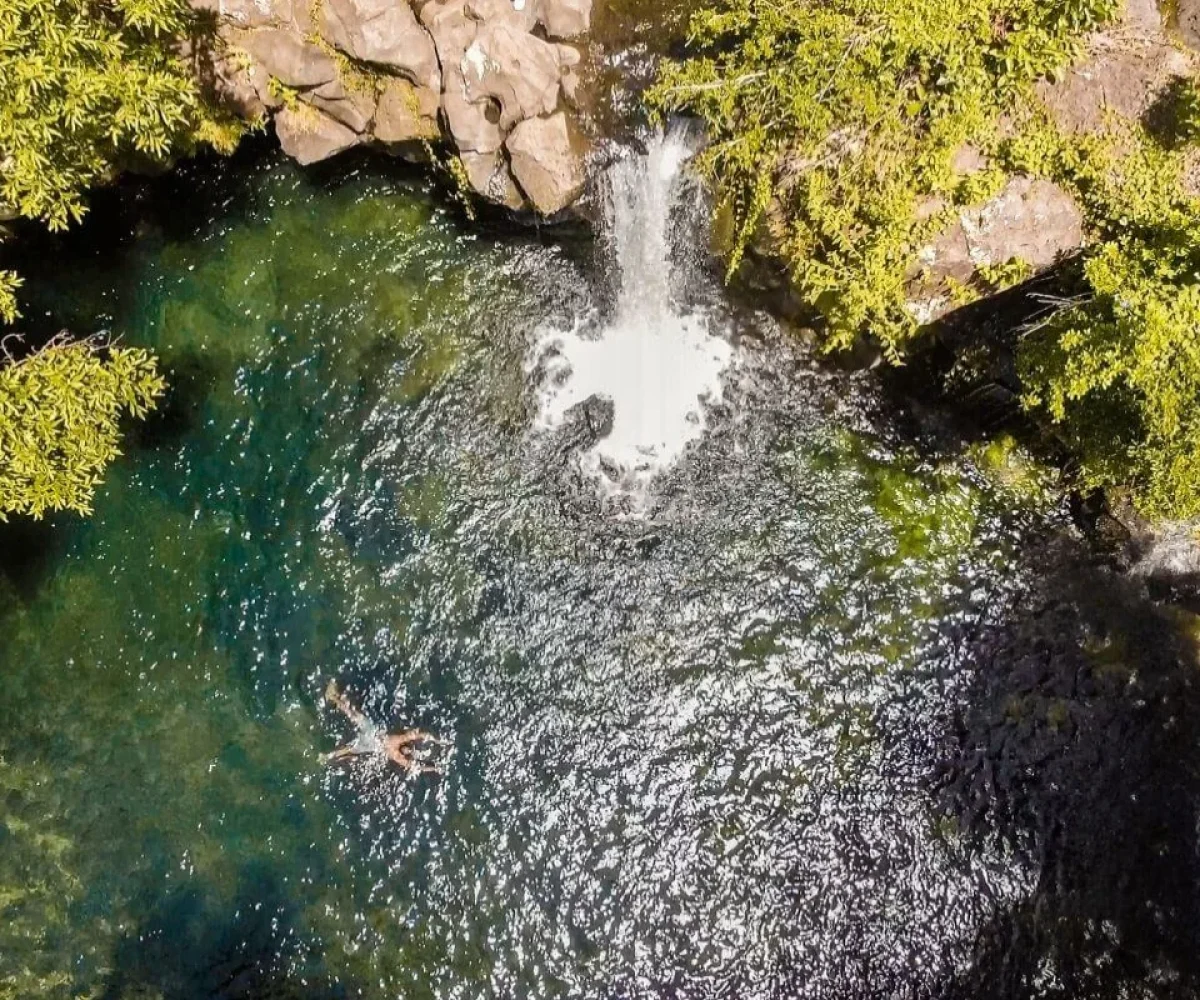
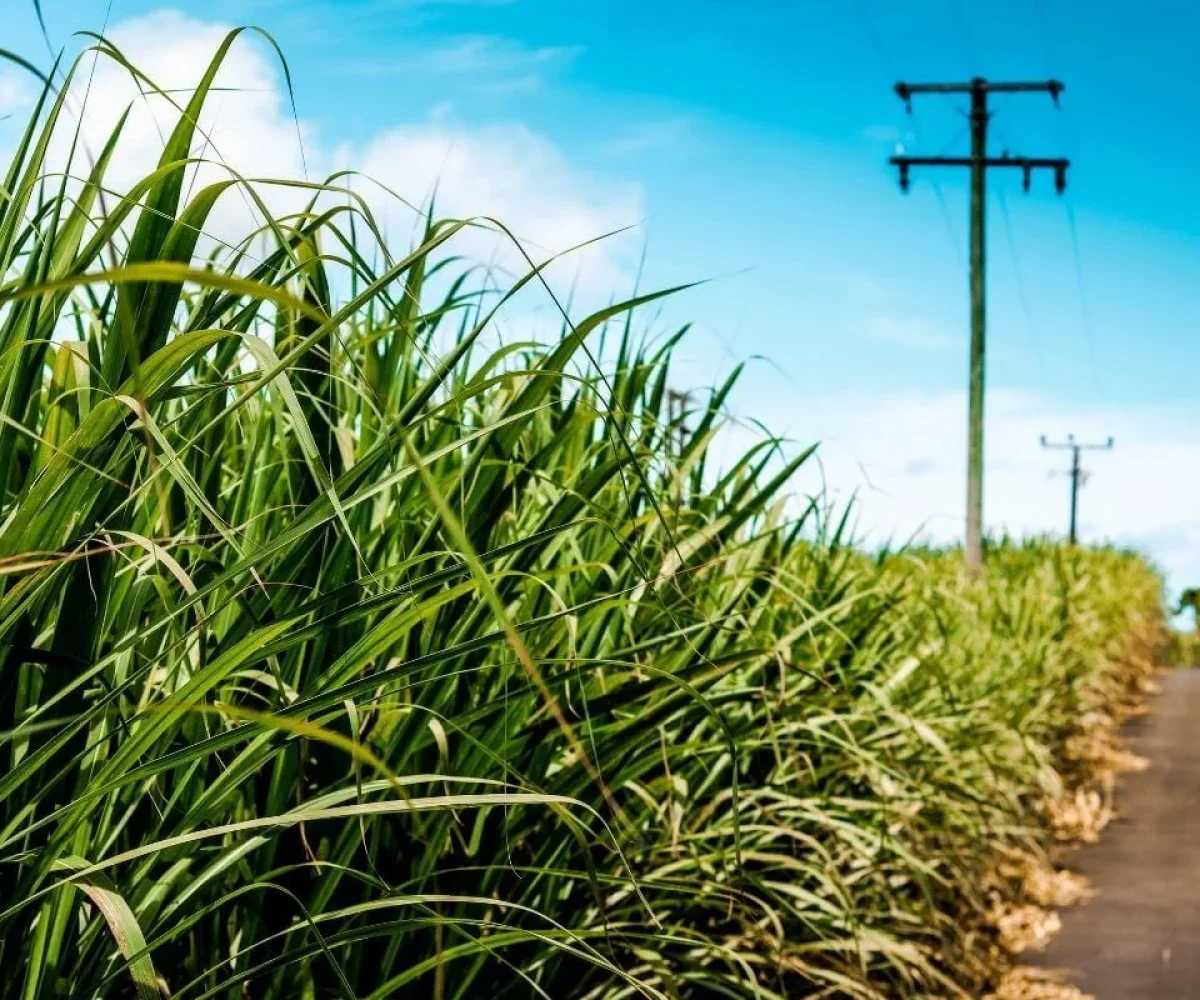
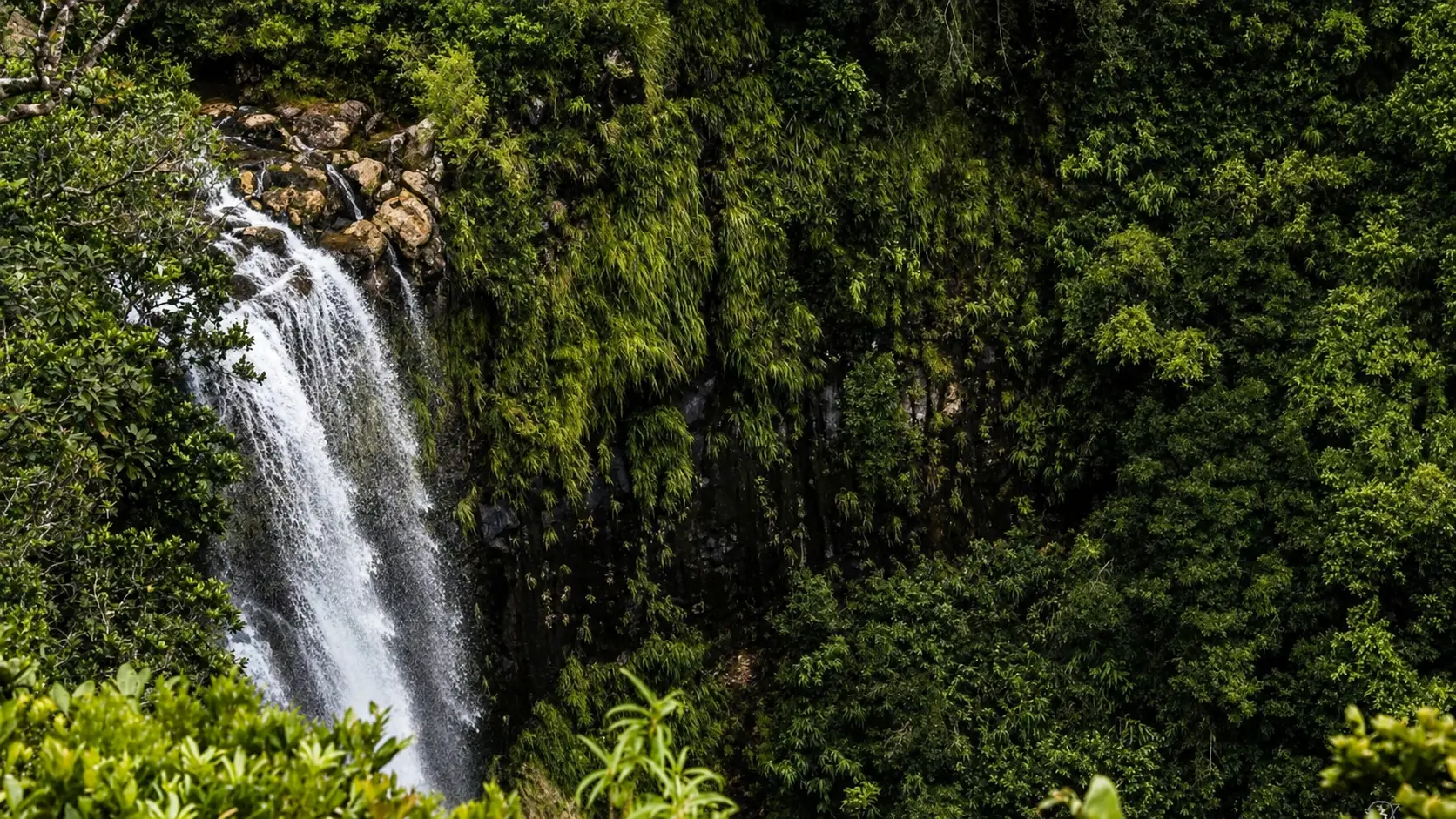
Eau Bleue — also called Cascade La Source — is not one waterfall but a run of them along a river below the village of Cluny, in the south-east. Nothing about the approach suggests what is there: a narrow lane through sugarcane, a CWA water pumping station, then a trampled path into the trees. A few minutes later the ground drops away to a pool of extraordinary blue-green water with a fall pouring into it, the colour coming from the mineral content of the riverbed and the spring water feeding it.
Several separate falls and pools sit along the same stretch of river, each with its own scramble down. The nearest ones are shallow and easy, with drops of only a couple of metres; the pool most people come for is deeper — several metres — and reached by climbing down through tree roots and rock. Locals swim and jump here, but there are no railings, no signage, no lifeguards and no facilities of any kind. The descent is genuinely slippery, and after heavy rain the flow rises fast and the rocks become dangerous, which is why the drier months from around May to November are the sensible time to come. Licensed operators also run canyoning and river-trekking trips on this river if you would rather go with a guide.
Open access, daylight hours only No gate, ticket or opening times Avoid after heavy rain
WHAT TO BRING
Shoes with grip, swimwear, a towel and drinking water. There are no shops, toilets or bins — take everything out with you.
ACCESSIBILITY
Not accessible: reaching the pools means a steep, slippery scramble down rock and tree roots. There are no railings or lifeguards and the main pool is several metres deep, so it suits confident swimmers only. Go with someone who knows the paths if you can.
EXPLORE MORE AROUND
Pair Eau Bleue With
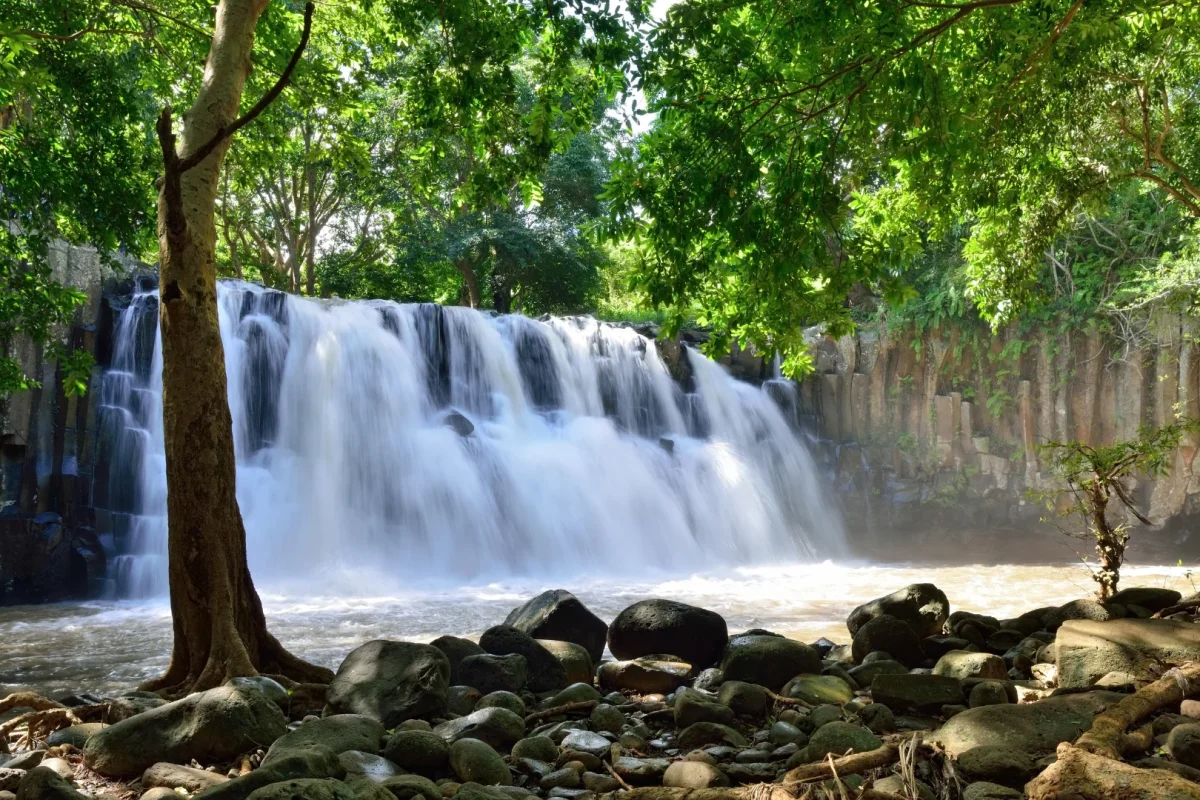
Rochester Falls
The other classic southern waterfall, where the river drops over square columns of basalt into a broad pool near Souillac.
Eau Bleue Waterfalls, B83, near Cluny, Grand Port District, Mauritius
DRIVE TIME
Around 50 min–1 hour from Port Louis Approximately 20–25 minutes from Mahébourg Around 30 minutes from Curepipe Add 10 minutes for the cane-field lane and the walk in.
GETTING THERE
There are no signposts. Drive through Cluny village and onto the B83 through the cane fields; park near the CWA water pumping station and take the path opposite, on foot, towards the trees. Other pools lie further along the same road.
On the river below Cluny village in the south-east, off the B83 through the cane fields. There are no signposts — the usual marker is the CWA water pumping station, with the path starting opposite it.
The colour comes from the mineral content of the riverbed and the spring water feeding the pools, which is why it reads as turquoise rather than the tea colour of most Mauritian rivers. The effect is strongest in clear, dry conditions.
Yes, and most people do. The nearest pools are shallow with drops of only a couple of metres; the main pool is several metres deep with no railings and no lifeguards, so it suits confident swimmers only.
After heavy rain. The flow rises quickly, the rocks and tree roots on the descent become dangerously slippery, and the water loses its clarity. The drier months from around May to November are the safest bet.
No fee and no facilities — no gate, toilets, shop or bins. Bring water and take everything out with you. Guided canyoning and river-trekking trips on this river can be booked with licensed operators.