Ten days of clay idols, drumming and offerings, ending with processions to the rivers and the sea — the festival Mauritius’ Marathi community brought with them and made its own.
WHEN
August or September – 15 September in 2026
WHERE
Homes, mandals, rivers and beaches
PUBLIC HOLIDAY
Yes – a national public holiday
BEST SEEN
The immersion processions on the final day
What Ganesh Chaturthi Means Here
A god who is welcomed home, then given back to the water.
Ganesh Chaturthi marks the birth of Ganesh, the elephant-headed remover of obstacles and the god invoked before any new undertaking. In Mauritius it arrived with Marathi indentured labourers from western India in the nineteenth century, and the Marathi community remains at the centre of it — though the festival has long since spread well beyond them. It falls in the Hindu month of Bhadrapada, which places it in late August or September; in 2026 it is on Tuesday 15 September, a national public holiday.
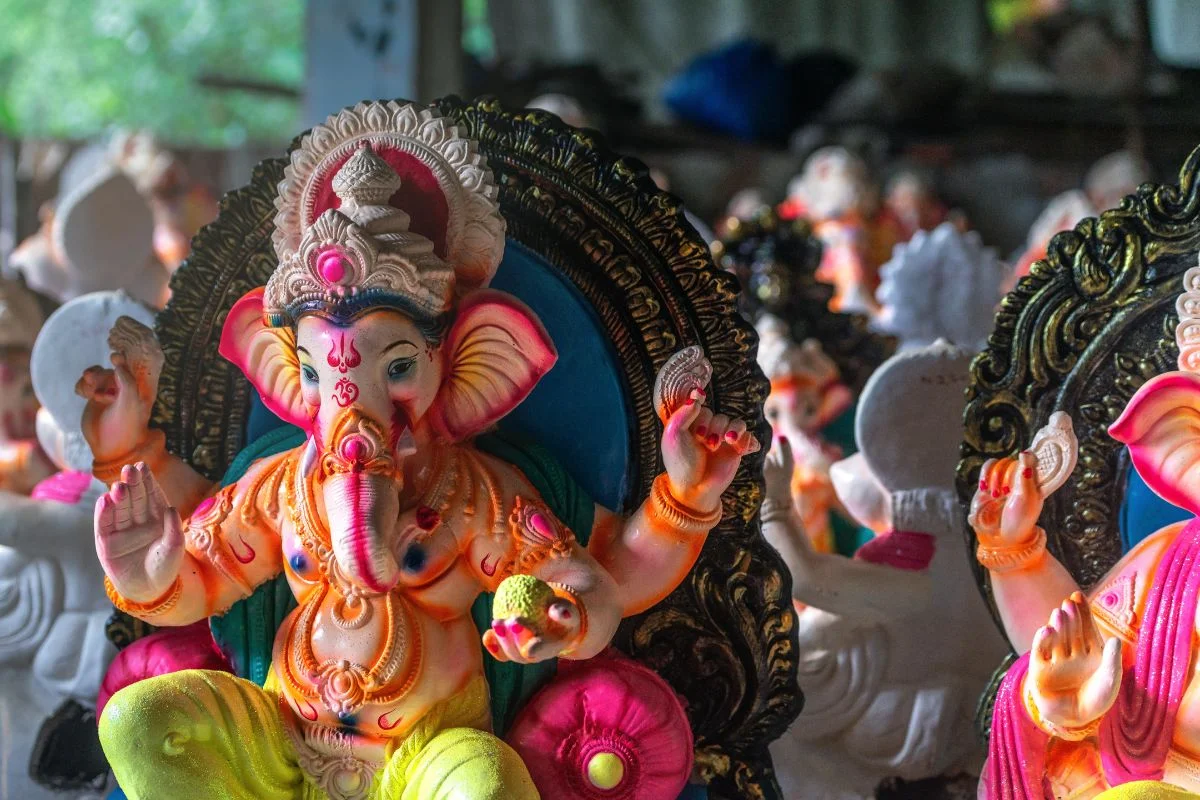
The shape of it is unusual among Hindu festivals because it has a clear beginning and a clear end. Clay idols of Ganesh are made and installed in homes and in community mandals, where they are kept for a set number of days — often ten, sometimes shorter — and honoured with daily prayers, incense, and offerings of modak and laddoo, the sweets said to be his favourite. Then comes visarjan: the idols are carried out in procession to a river or to the sea, accompanied by drums, dancing and the chant of Ganpati Bappa Morya, and immersed in the water. Watching a procession reach the coast at dusk is the most striking part of the whole festival. Because plaster idols damage the waterways, there has been a steady shift back to unfired clay and natural pigments.
Clay idols are installed at home or in community mandals, honoured with daily prayers and offerings of modak and laddoo, then carried in procession to a river or the sea for immersion on the final day.
ETIQUETTE FOR VISITORS
Watching a procession is welcome; joining it uninvited is not. Dress modestly, remove your shoes at any shrine, and ask before photographing families or the idol itself.
PLANNING AROUND IT
A public holiday, so most shops and offices close. Coastal roads near immersion points are congested in the late afternoon of the final day — allow extra time, or park early and walk.
WHERE TO SEE IT
Following the Procession
Rivers & Beaches
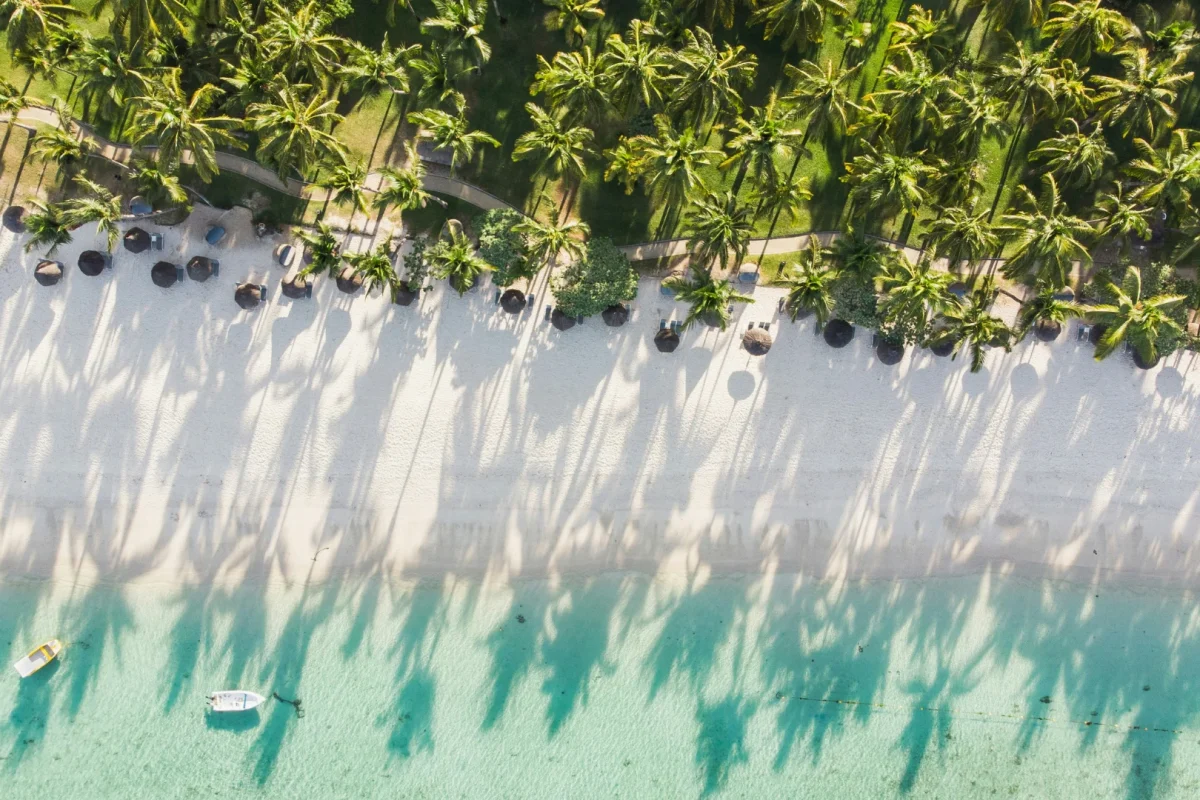
Where every procession ends. Immersion points on the west and north coasts draw the biggest crowds in the late afternoon of the final day.
It falls in the Hindu month of Bhadrapada, so the date moves between late August and September each year. In 2026 it is on Tuesday 15 September, listed as a national public holiday in the government’s published calendar.
The festival came to Mauritius with Marathi indentured labourers from western India in the nineteenth century, and the Marathi community remains at its centre — though it is now observed far more widely.
Visarjan — the final act. After days of prayers and offerings at home or in a community mandal, the clay idol is carried in procession to a river or the sea, with drumming, dancing and the chant of Ganpati Bappa Morya, and immersed in the water.
The sweets traditionally offered to Ganesh. Modak are steamed dumplings filled with coconut and jaggery; laddoo are round sweets of flour, ghee and sugar. Both are made at home in large quantities and shared with visitors.
Yes, and they are the most memorable part of the festival. Watch rather than join unless invited, dress modestly, and ask before photographing people or the idol. Expect heavy traffic near coastal immersion points late in the day.