Home / Experience Mauritius / Unveiling the Paradise / Rochester Falls
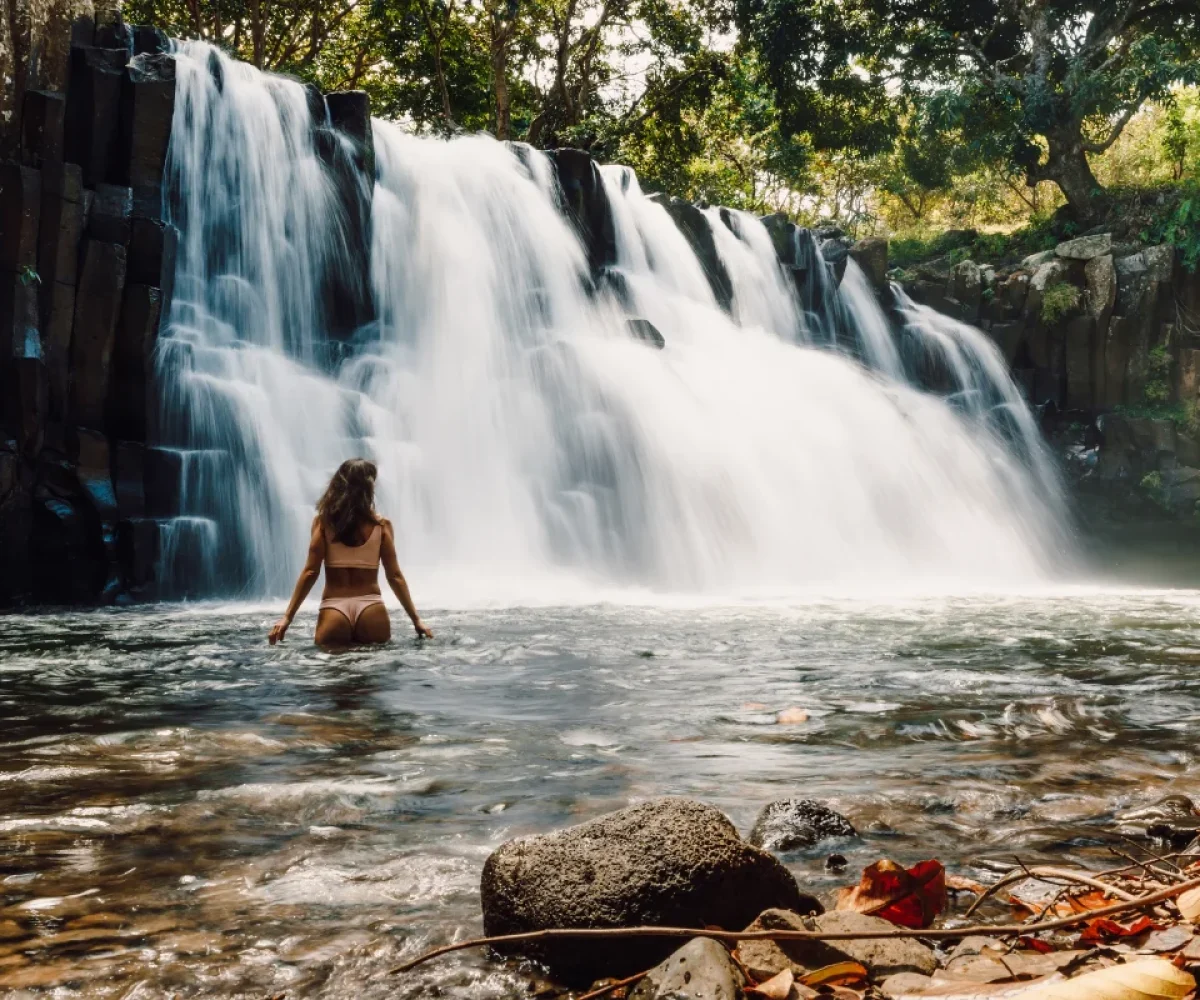
A wide curtain of water dropping over square columns of basalt in the cane fields behind Souillac — the most distinctive waterfall on the island, and one of the few you can swim beneath.
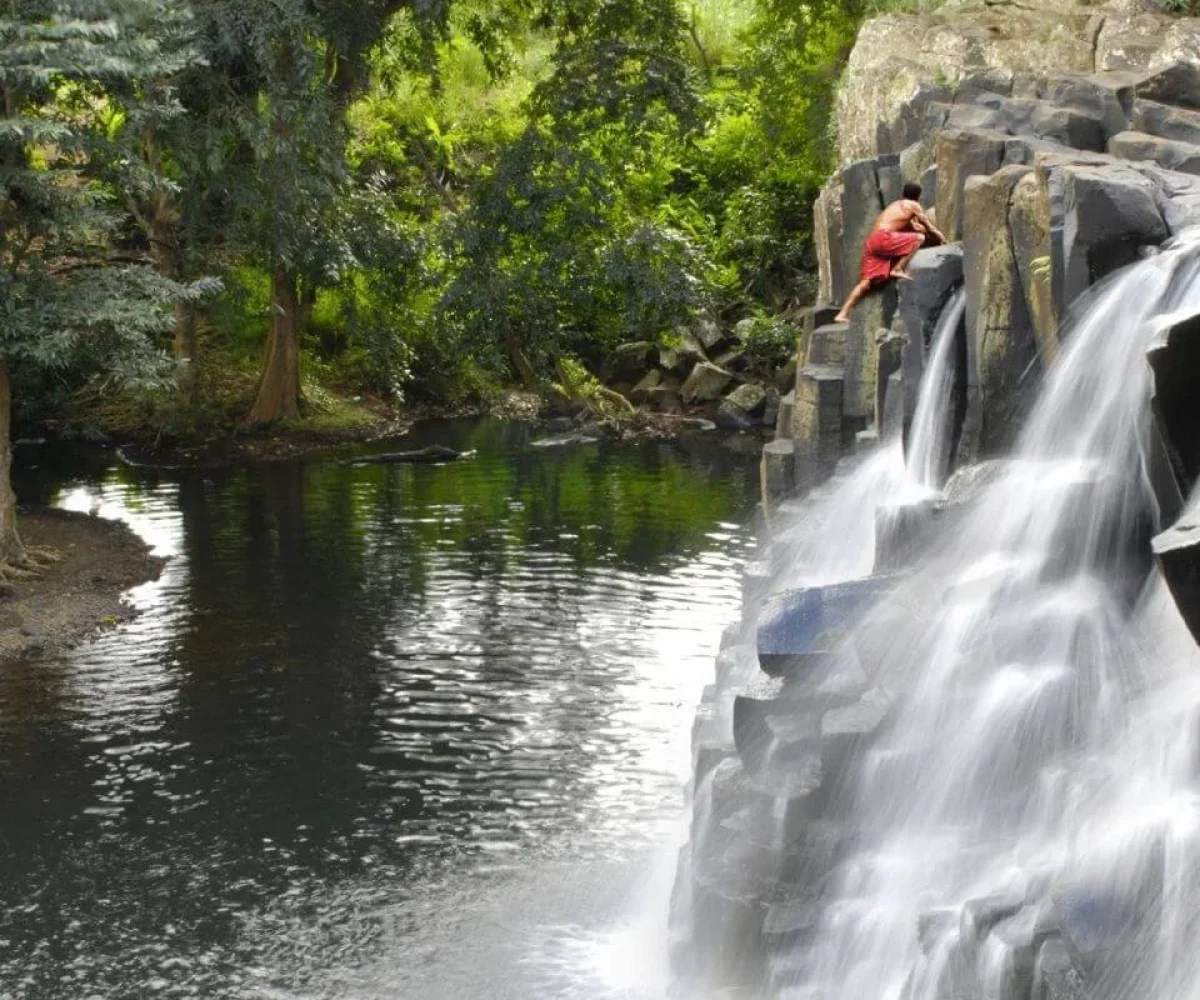
The Savanne River drops around ten metres here, but it is the rock rather than the height that makes Rochester Falls worth finding. The basalt has fractured into tall rectangular columns that stand shoulder to shoulder across the whole width of the fall, so the water comes down what looks unnervingly like a hand-built wall. It is the same columnar jointing that produces the Giant’s Causeway, formed as thick lava cooled and contracted, and nowhere else in Mauritius shows it this clearly.
Below the fall is a broad, deep pool, and this is one of the few Mauritian waterfalls where swimming is genuinely part of the visit; local youngsters jump from the columns, which is not something to copy without knowing the depths. Getting there is the catch. The turn-off is in the cane fields behind Souillac and the final stretch is an unsurfaced, deeply rutted track that punishes low cars — many visitors park where the surface deteriorates and walk the last part, ten to fifteen minutes through the cane. There are no facilities, no lifeguards and no signage, and informal guides sometimes offer to lead you in for a tip. Come in the drier months when the track is passable; after heavy rain the flow is spectacular but the approach turns to mud and the current below the fall becomes dangerous.
Open access, daylight hours only
No gate, ticket or opening times
Track often impassable after heavy rain
Shoes with grip, swimwear, a towel and drinking water. There are no shops, toilets or bins — take everything out with you, and keep small change if you use an informal guide.
The final approach is an unsurfaced cane-field track, best in a high-clearance vehicle; otherwise park early and walk. The descent to the pool is over uneven wet rock with no railings, and the pool is deep with no lifeguards — jumping from the columns is popular locally but risky.
Ten minutes back towards the sea at Souillac, where the reef ends and the open ocean hits the cliffs head-on.
Up on the plateau behind Souillac: the island’s oldest tea estate, with a factory tour and a tasting looking over the plantation.
Along the coast at Riambel: a family-run cultural house with a heritage museum, spice gardens, stone grinding and tastings.
Rochester Falls,
off Rochester Road, Souillac,
Savanne District, Mauritius
Around 1 hour from Port Louis
Approximately 45 minutes from the airport
Around 10 minutes from Souillac
Add 10–15 minutes for the unsurfaced cane-field track.
Turn inland off the coast road at Souillac and follow the lane through the cane fields; where the tarmac ends, an unsurfaced track leads towards the river. Most visitors in a standard car park at that point and walk the last ten to fifteen minutes.
The rock. The basalt has fractured into tall rectangular columns across the full width of the fall, so the water pours over what looks like built masonry. It is the same columnar jointing seen at the Giant’s Causeway, and it is not this pronounced anywhere else on the island.
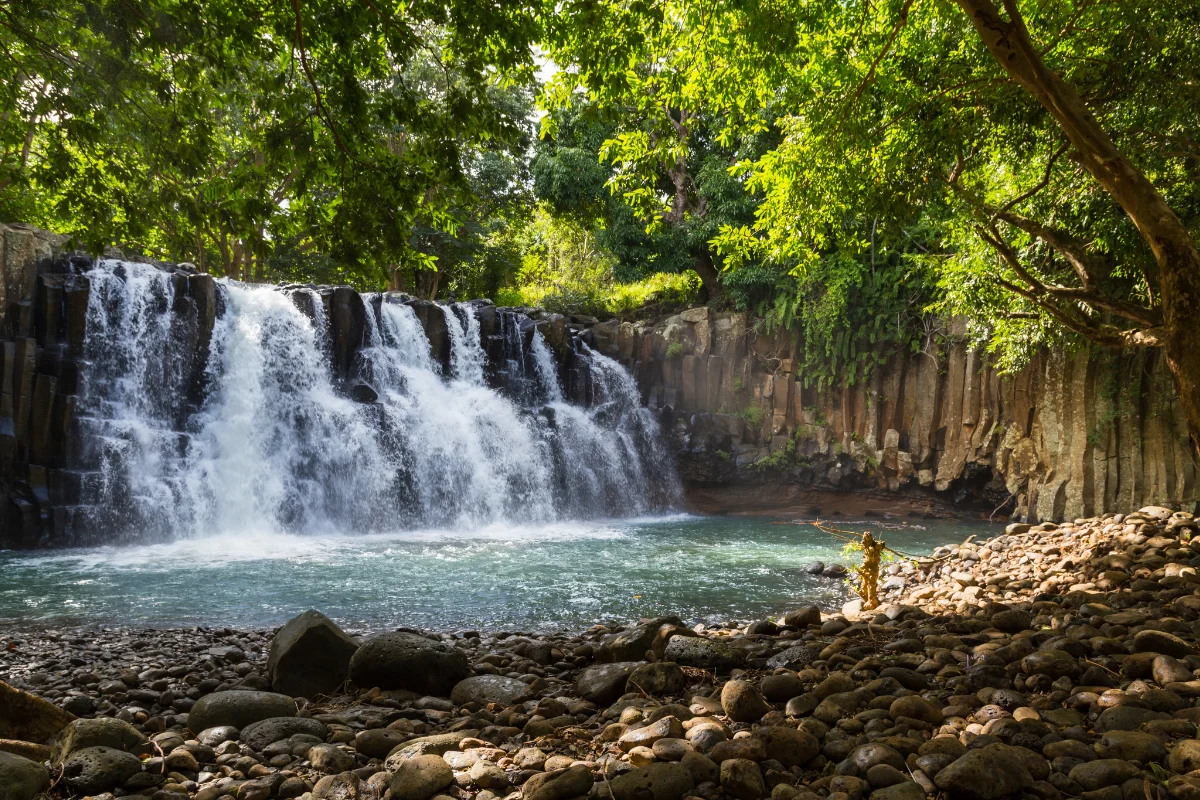
Yes — there is a wide, deep pool below the fall and swimming is part of the visit for most people. There are no lifeguards, and the jumping from the columns you may see locals doing is not something to attempt without knowing the depths.
Rough. The last stretch through the cane fields is unsurfaced and deeply rutted. A high-clearance vehicle helps; in a standard car, park where the surface deteriorates and walk the final ten to fifteen minutes.
No official fee, gate or ticket office. Informal guides sometimes offer to lead visitors in from the parking area and will expect a tip — agree on it beforehand if you accept.
The drier months, when the track is passable and the rock is less slippery. After heavy rain the fall is at its most powerful but the approach turns to mud and the pool becomes unsafe.