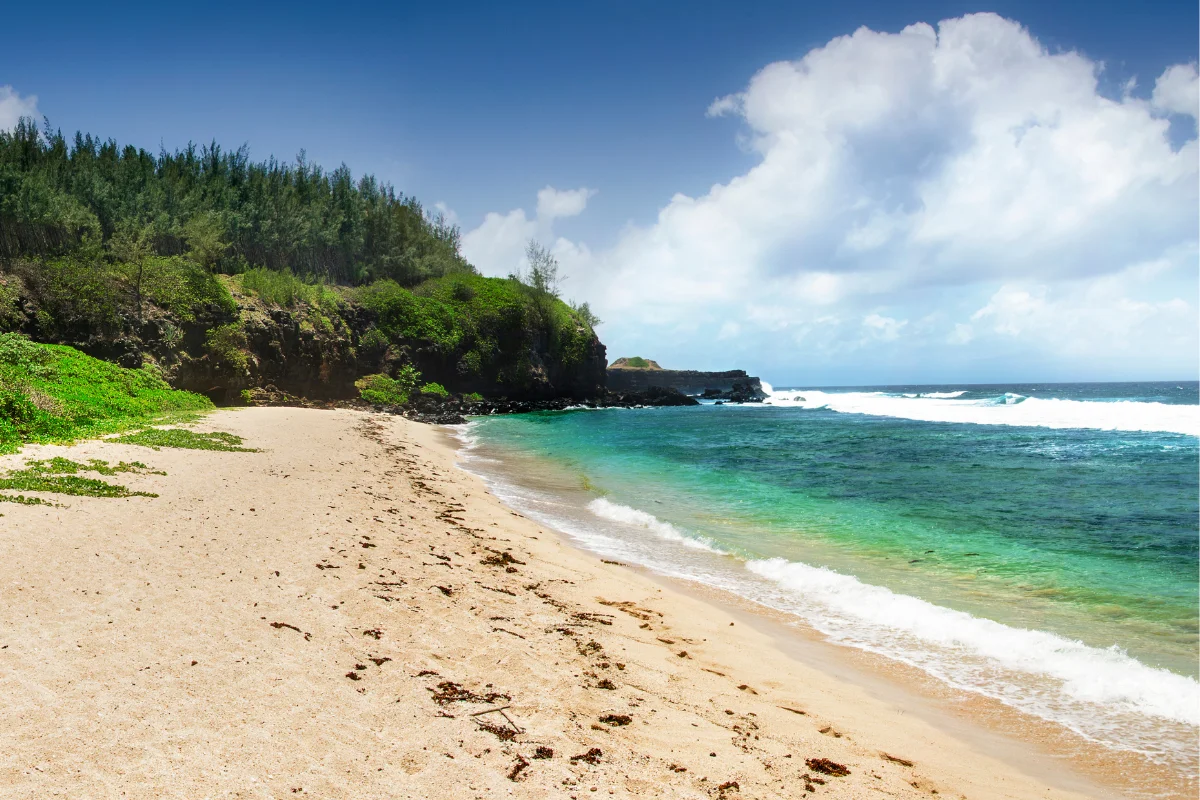
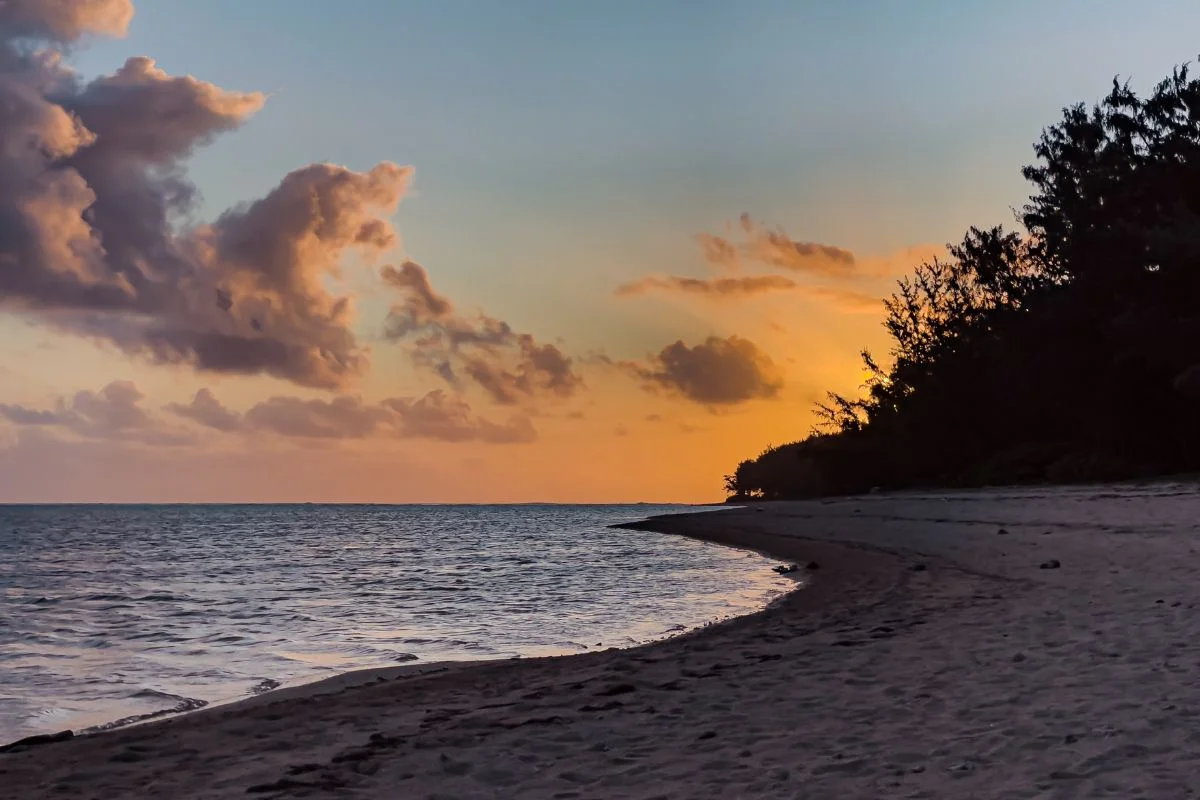
The one place in Mauritius with no reef in front of it — a clifftop lawn above a beach where the open Indian Ocean arrives at full force. Spectacular to watch, and not a place to swim.
REGION
Souillac, Savanne (South Coast)
BEST TIME
Rough-sea days; late afternoon light
ACCESS
Free – car park at the clifftop
GOOD FOR
Clifftop walks, photography – not swimming
Why It's Worth the Trip
Where the reef stops and the ocean takes over.
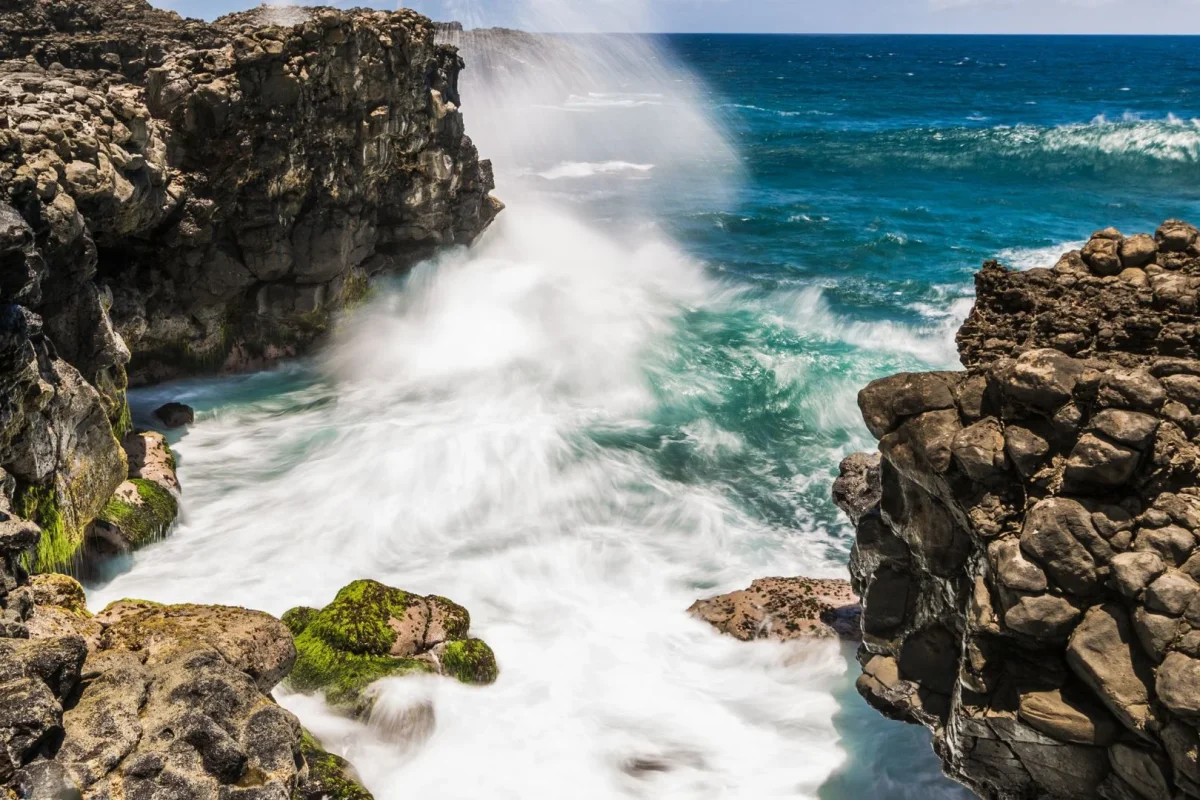
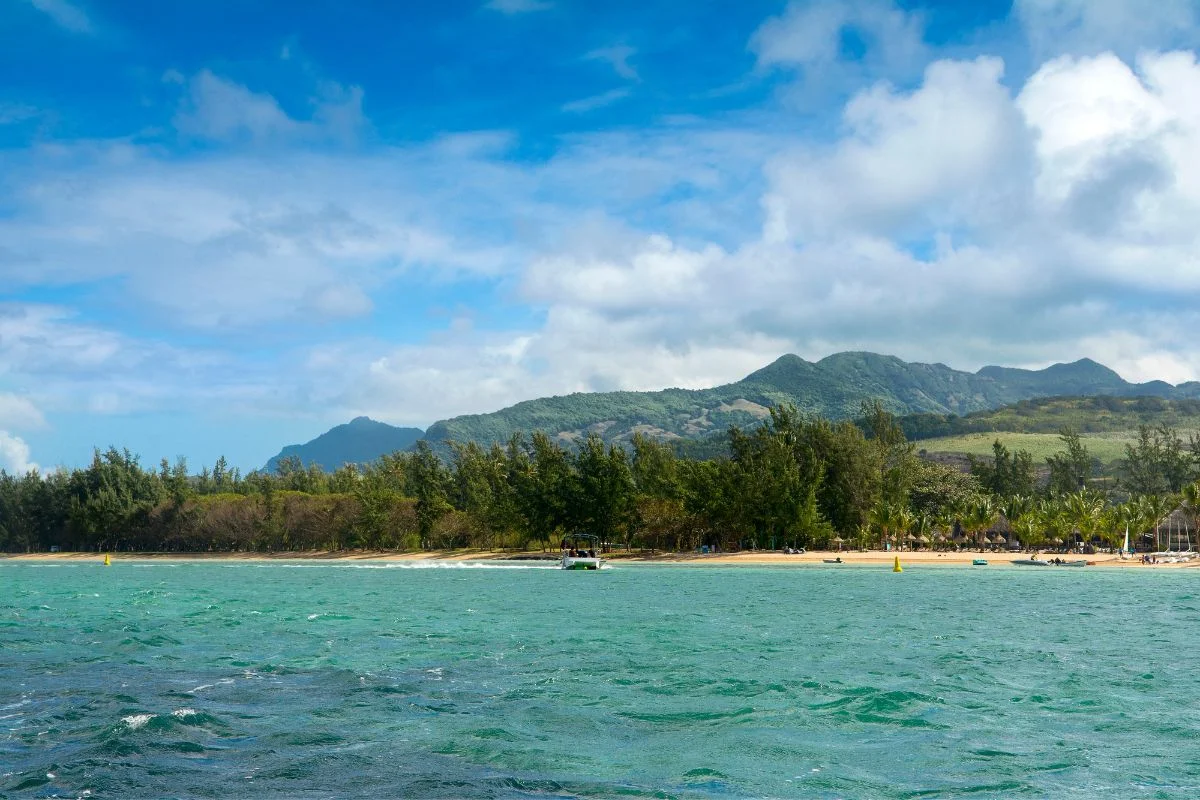
Almost the whole of Mauritius sits inside a coral reef, which is why the island is ringed by calm turquoise lagoons. At Gris Gris, just east of Souillac, that reef simply ends. The Indian Ocean arrives here having crossed thousands of kilometres of open water with nothing to slow it, and it hits the black basalt cliffs head-on. The result is the most dramatic coastal scenery on the island: white spray thrown up the rock face, a permanent low roar, and a short beach of coarse sand below that no one should enter.
Above it runs a mown clifftop lawn with benches and a path east along the edge, which is where you should spend your time. Ten minutes’ walk brings you to La Roche qui Pleure — the rock that cries — a weathered outcrop that resembles a face in profile, with water streaming down it as the swell breaks. The name Gris Gris has no settled origin: some link it to the Creole term for sorcery, others to a ship or an old chart name. What is not in doubt is the danger. There are no lifeguards, the current is ferocious, and people have drowned here; the beach is for walking on, not swimming from. Come when a swell is running for the full effect, and keep back from the unfenced edges.
There is no reef and no protection here. Currents are severe, the shore break is violent and there are no lifeguards. Drownings have occurred. Stay on the sand and the clifftop path, and keep well back from unfenced edges, especially in wet weather.
WHAT TO BRING
Closed shoes with grip for the clifftop path, a windproof layer and a camera. There is no shade on the lawn and little shelter from the wind.
FACILITIES & ACCESS
Free car park at the clifftop with toilets and a snack kiosk nearby, and a mown lawn with benches above the beach. The path east to La Roche qui Pleure takes about ten minutes on foot and is uneven in places.
NEARBY
Make a Day of It
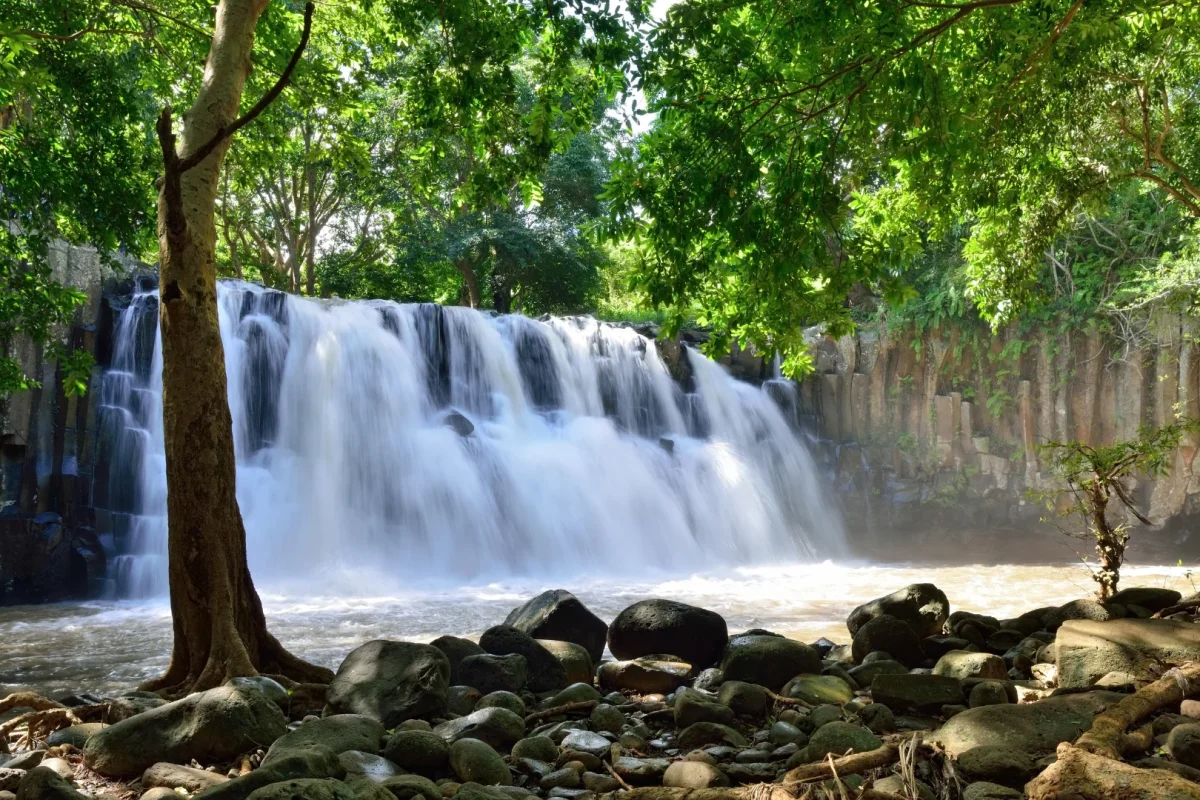
Rochester Falls
Ten minutes inland behind Souillac: a wide fall over square basalt columns, with a deep pool you can actually swim in.
Gris Gris, off Souillac, Savanne District, Mauritius
DRIVE TIME
Around 5 minutes from Souillac Approximately 40–45 minutes from the airport Around 1 hour from Port Louis
GETTING THERE
Signposted through Souillac village and down to the coast, with a free car park at the top of the cliffs. The lawn, benches and clifftop path start at the car park.
No. There is no reef offshore, the currents are severe and the shore break is violent, with no lifeguards. Drownings have occurred here. The beach is for walking on — swim at Bel Ombre or Riambel instead.
Because the coral reef that surrounds most of Mauritius ends here. The Indian Ocean arrives after thousands of kilometres of open water with nothing to break it, and hits the basalt cliffs directly.
The rock that cries — a weathered outcrop about ten minutes’ walk east along the clifftop path, shaped like a face in profile, with water streaming down it as the swell breaks against the rock.
There is no settled answer. Some connect it to the Creole term for sorcery or charms, others to a ship or an old chart name for this stretch of coast. Both explanations circulate locally.
When a swell is running — the bigger the sea, the more spectacular the spray against the cliffs. Late afternoon gives the best light. There is free parking, toilets and a kiosk at the clifftop, and the lawn has benches.