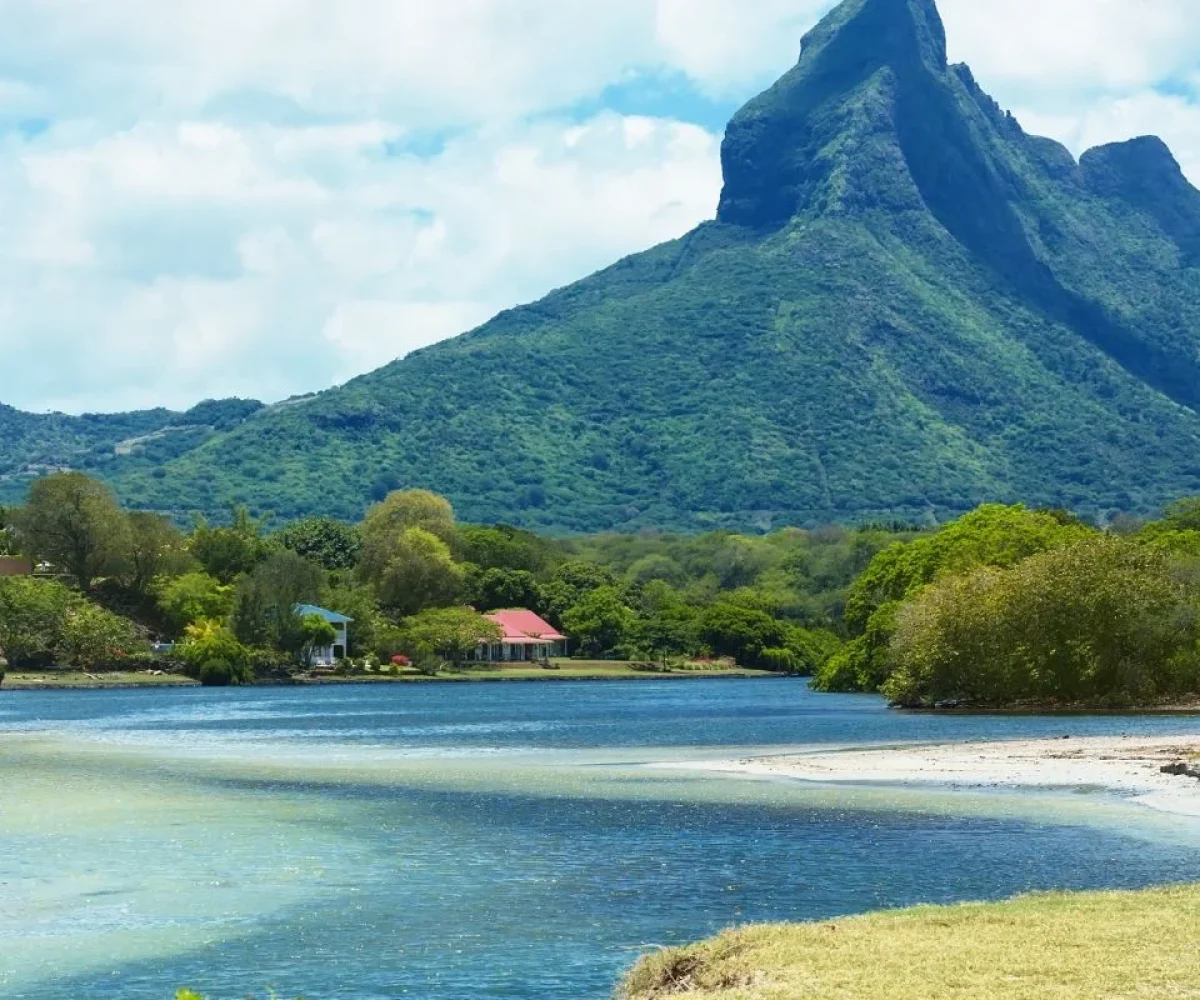
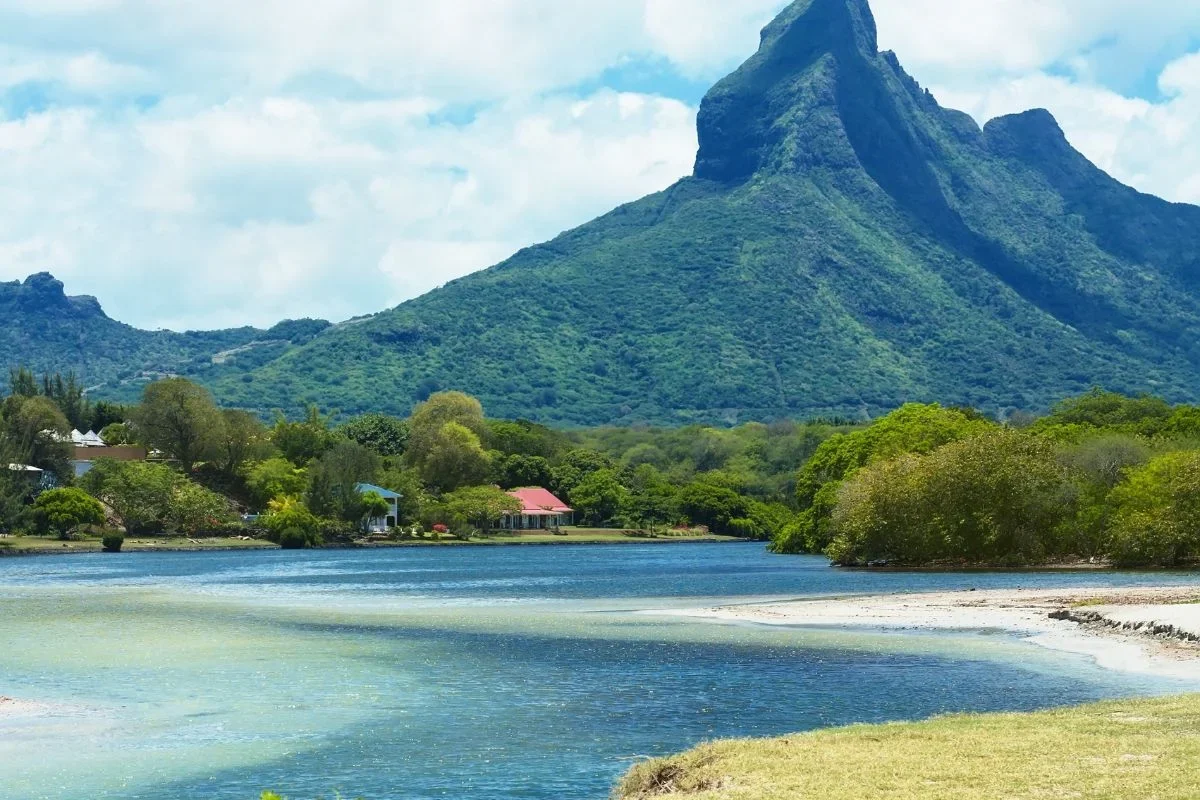
The last working salt pans in Mauritius — thirty hectares of shallow stone basins at the entrance to Tamarin, where sea salt is still raked and carried by hand beneath La Tourelle mountain.
REGION
Tamarin, Rivière Noire (West Coast)
BEST TIME
Early morning, September to January harvest
ENTRY
Small entry fee – shop free to enter
TIME NEEDED
45 minutes to 1 hour
Why It's Worth the Visit
A two-hundred-year-old trade still worked by hand.
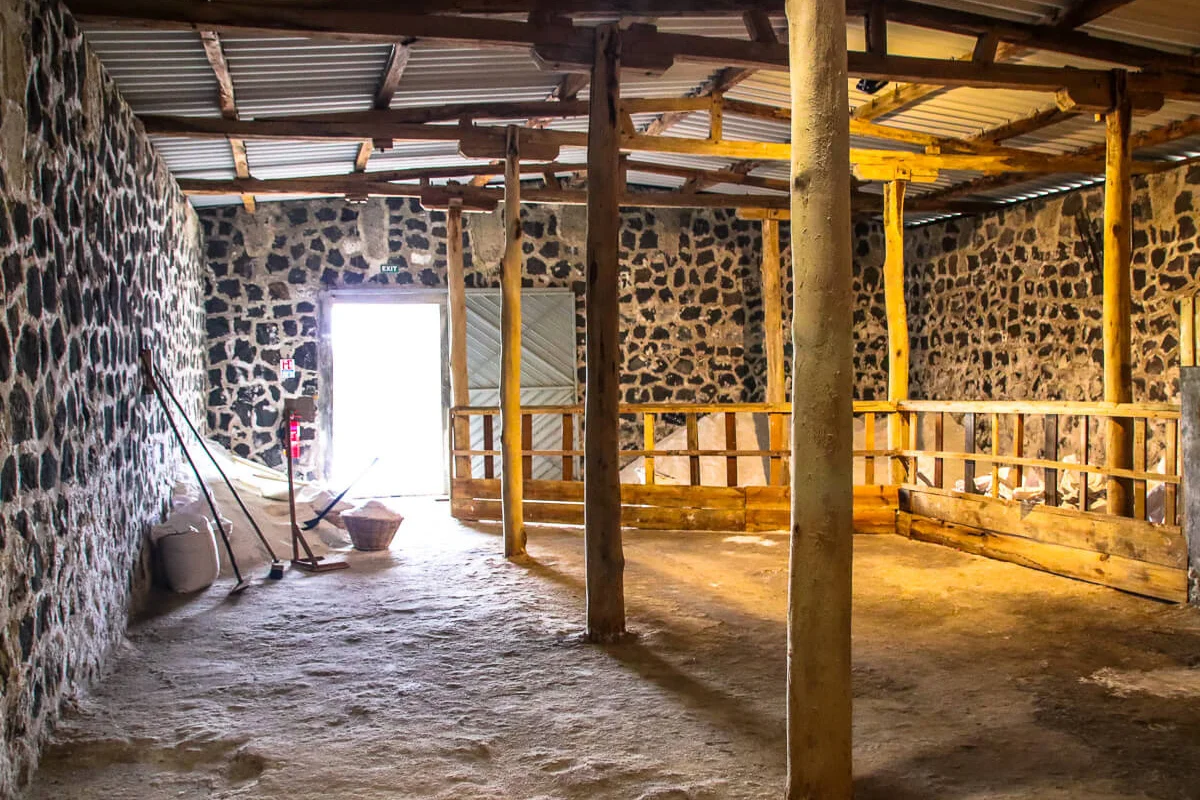
Known locally as Les Salines de Yemen, the pans sit at the entrance to Tamarin village, spread over some thirty hectares between the coast road and the foot of La Tourelle. They date to the French colonial period, when salt was a strategic commodity used to preserve meat aboard ships, and they are now the only place on the island where sea salt is still produced the traditional way. The basins and storerooms were laid by hand in volcanic paving stone, and the method has barely changed in two centuries.
Seawater is pumped into the highest basins and moved slowly down through the grid, growing more concentrated as the sun and the west-coast wind take the water off, until crystals form in the final crystallising pans. What is harvested is coarse sea salt and, from the surface of the brine, the finer fleur de sel. A guided visit walks you through the sequence and the history; the shop beside the entrance is free to enter and sells salt and salt-based products directly. Harvesting runs roughly from September into January, and the sight worth setting an alarm for is the saunères at first light — workers in blue sweeping the salt into white mounds and carrying full baskets on their heads to the storerooms. Outside the season there is little activity beyond cleaning the crystallisers, though the geometry of the pans and the mountain behind them still photograph beautifully.
Monday to Friday, 8:30 AM – 4:00 PM Saturday, 8:30 AM – 11:30 AM Closed Sundays
WHAT TO BRING
A hat, sunglasses and water — the pans are white, open and glaring, with no shade at all. Cash is handy for the shop.
ACCESSIBILITY
Flat, open ground with gravel paths between the basins, and parking at the entrance. Harvesting depends entirely on the weather, so activity is not guaranteed on any given day — worth calling ahead if you want to see the workers at it.
EXPLORE MORE AROUND
Pair Tamarin Salt Pans With
Tamarin Beach
A few minutes down the road, where the Rempart river meets the sea — a surf beach and the departure point for early-morning dolphin trips.
Les Salines de Yemen, Royal Road, Tamarin, Rivière Noire District, Mauritius
DRIVE TIME
Around 35–40 minutes from Port Louis Approximately 15 minutes from Flic-en-Flac Around 30 minutes from Le Morne
GETTING THERE
Directly on the coast road at the entrance to Tamarin, coming from Black River or Flic-en-Flac — the pans are visible from the roadside, with parking and the shop at the entrance.
Yes. Known as Les Salines de Yemen, they are the last salt pans in Mauritius still producing sea salt by traditional, artisanal methods, across roughly thirty hectares of stone basins at the entrance to Tamarin.
Harvesting generally runs from around September into January and depends heavily on the weather. Come at first light to see the workers raking the salt into mounds and carrying baskets to the storerooms; outside the season there is little activity beyond cleaning the crystallising pans.
Seawater is pumped into the highest basins and moved gradually down through the grid. The sun and the west-coast wind evaporate the water, concentrating the brine until crystals form in the final pans, producing coarse sea salt and the finer fleur de sel skimmed from the surface.
Monday to Friday from 8:30 AM to 4:00 PM and Saturday mornings until 11:30 AM, closed Sundays. There is a small charge for the guided visit; the shop at the entrance is free to enter.
Yes — coarse salt, fleur de sel and salt-based products are sold at the on-site shop, which makes one of the more useful souvenirs to carry home from the west coast.