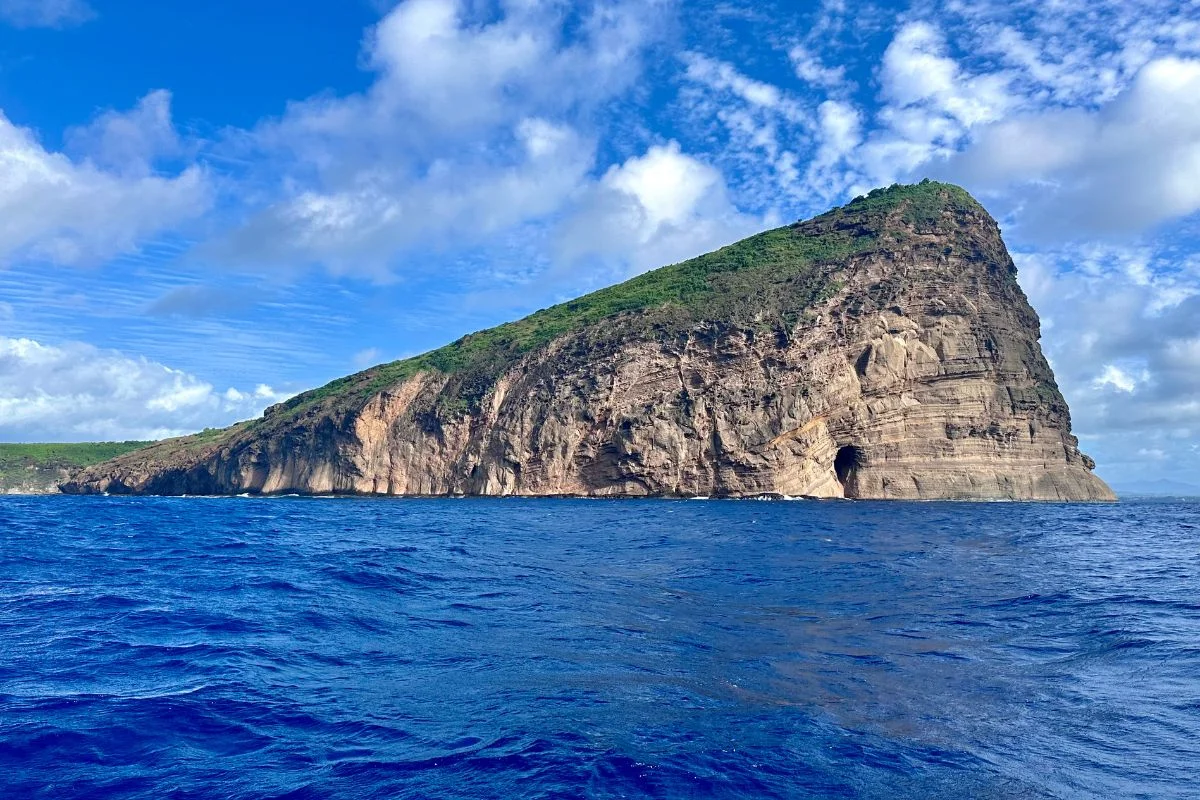
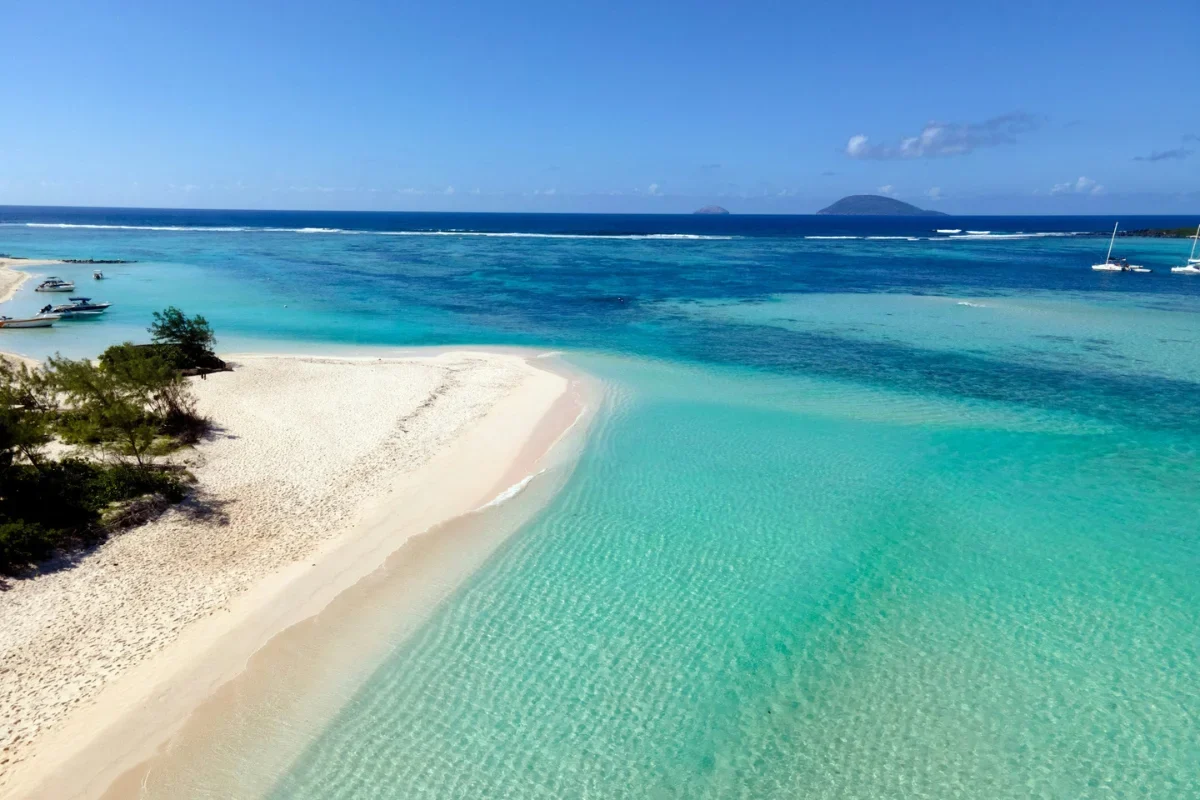
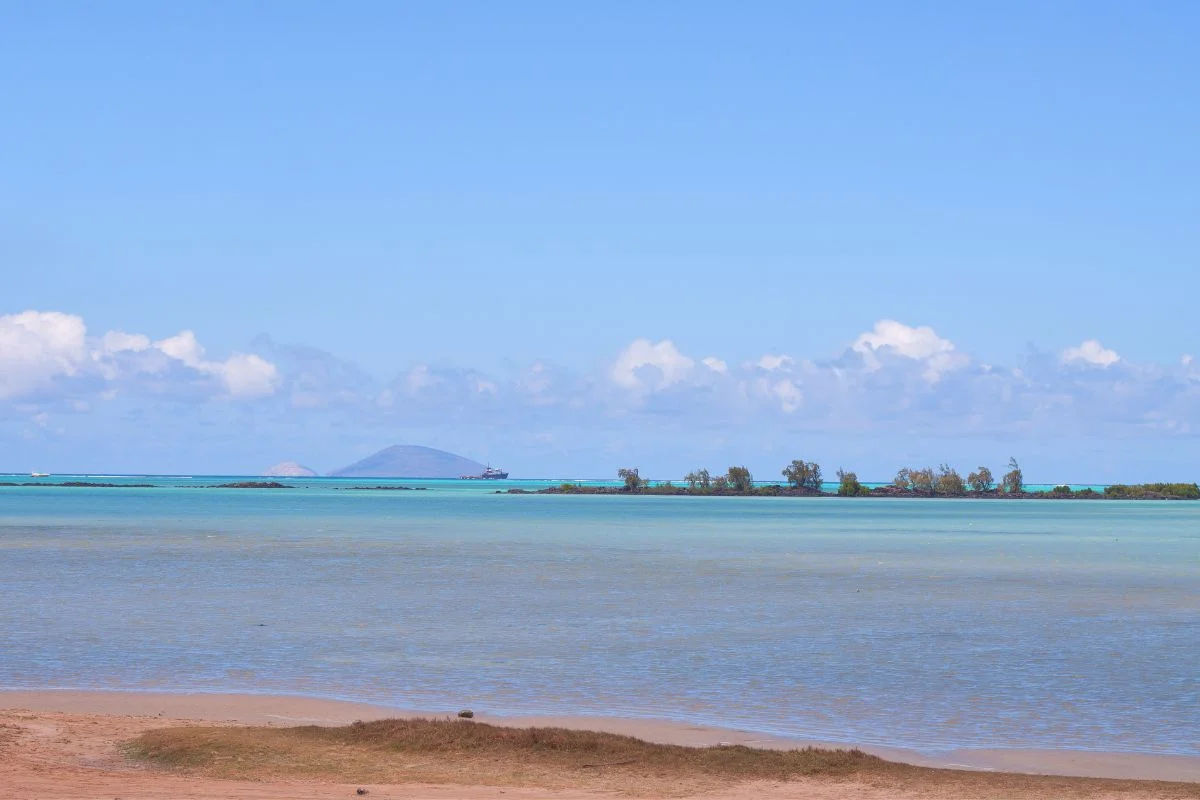
The wedge of rock on the horizon from every beach in the north — an uninhabited nature reserve rising 280 metres out of the sea, reached only by boat and best known for its diving.
REGION
Off Cap Malheureux (North)
BEST TIME
Morning departures; calmest seas Oct–Apr
ACCESS
By boat only – landing is restricted
GOOD FOR
Diving, snorkelling, catamaran cruises
Why It's Worth the Trip
The island everyone photographs and almost nobody lands on.
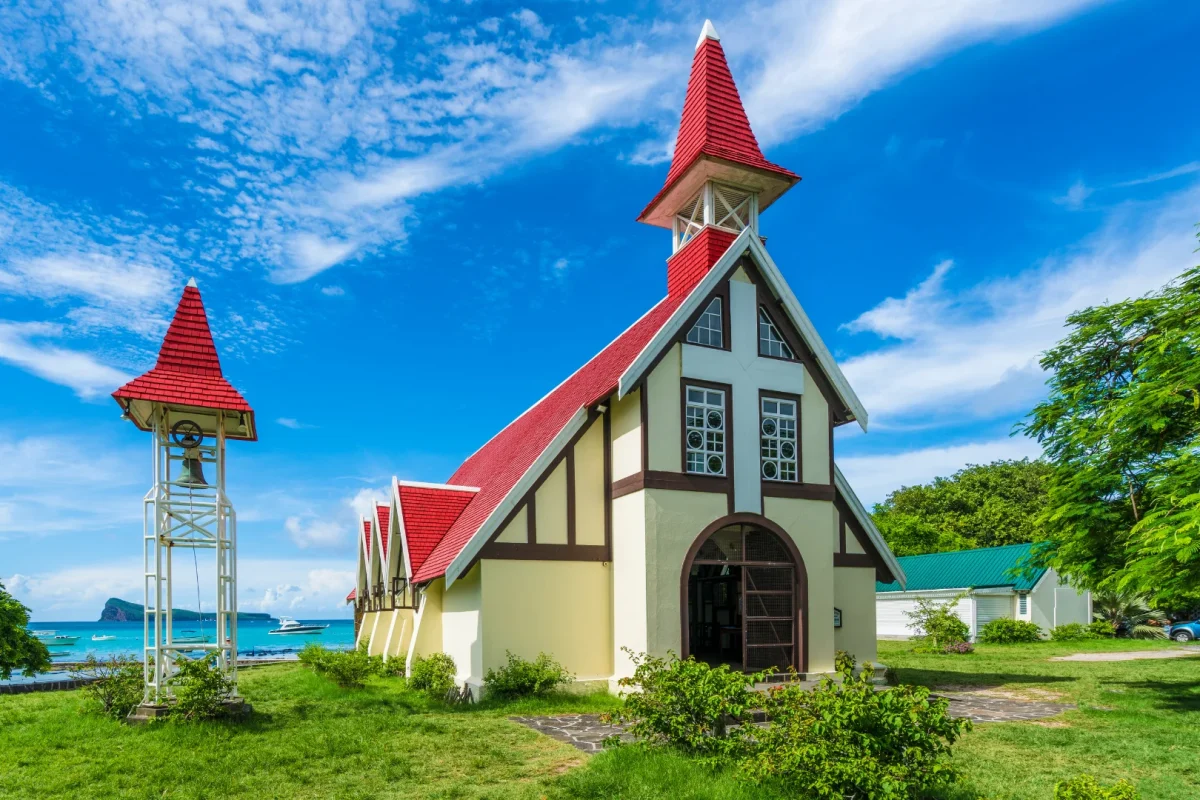
Coin de Mire sits a few kilometres off the northern coast, and its shape is the reason for both its names: the French coin de mire is the wedge a gunner slid under a cannon to set its elevation, which the British translated as Gunner’s Quoin. Seen from Cap Malheureux or Grand Baie it looks like a slab tipped up out of the water, rising to around 280 metres with sheer cliffs on the seaward side and dry, scrubby slopes facing the island.
It is an uninhabited nature reserve, protected for its seabird colonies and the remnants of dry coastal vegetation that survive on the cliffs — landing is restricted and requires permission, so for visitors the island is something you sail to, snorkel beside and photograph rather than explore on foot. What draws divers is the water around it: sites on the exposed flanks, including a well-known drop-off and a cave dive, count among the best in Mauritius, with strong life and good visibility but currents that make them intermediate to advanced territory. Most people encounter it on a catamaran day cruise from Grand Baie, which typically loops Coin de Mire before anchoring for lunch and snorkelling at Flat Island and Gabriel Island.
Reached by boat only. The island is a protected nature reserve and landing is restricted — standard cruises sail around it rather than putting ashore. Nothing should be removed and no plants or animals disturbed.
WHAT TO BRING
Mask and snorkel, reef-safe sunscreen, a hat and a windproof layer — the crossing is exposed. Certification cards if you plan to dive.
BOATS & DIVING
Catamarans and speedboats leave from Grand Baie and the north coast, most in the morning, usually combining Coin de Mire with Flat Island and Gabriel Island. The dive sites here carry current and are better suited to intermediate and advanced divers; go with a licensed centre.
NEARBY
Make a Day of It
Flat Island
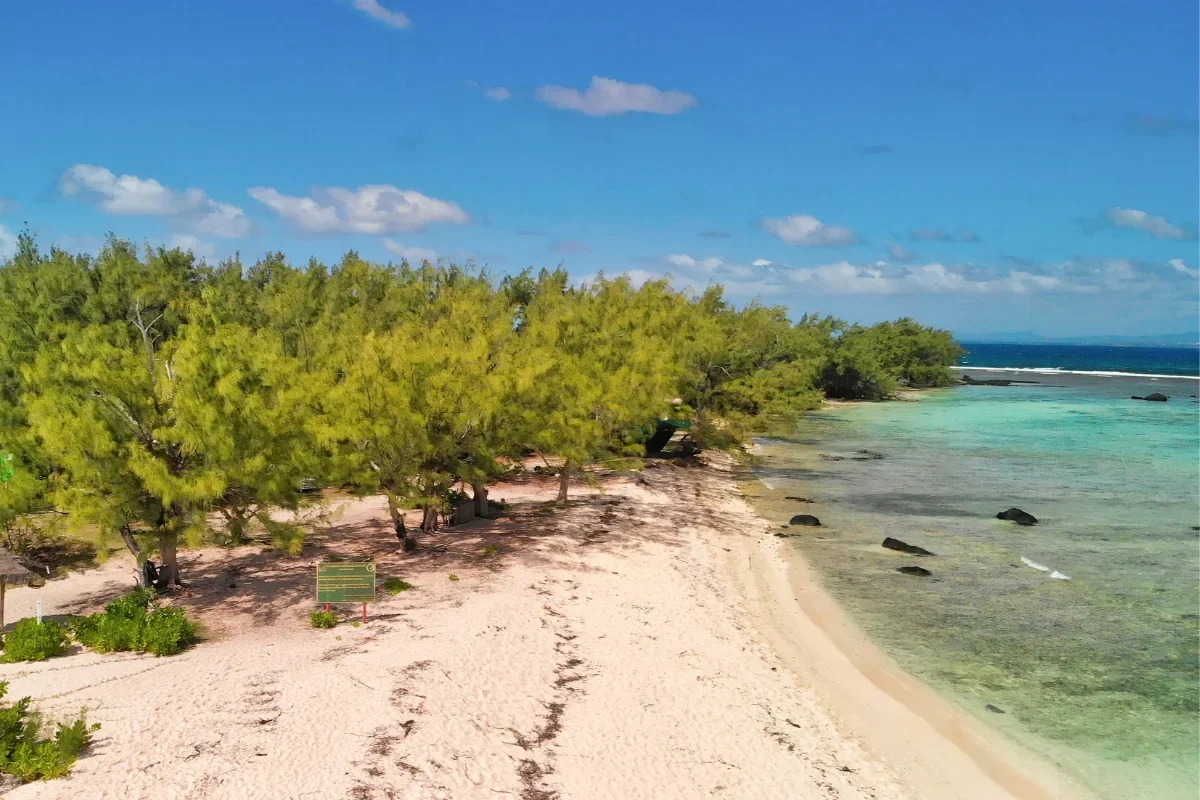
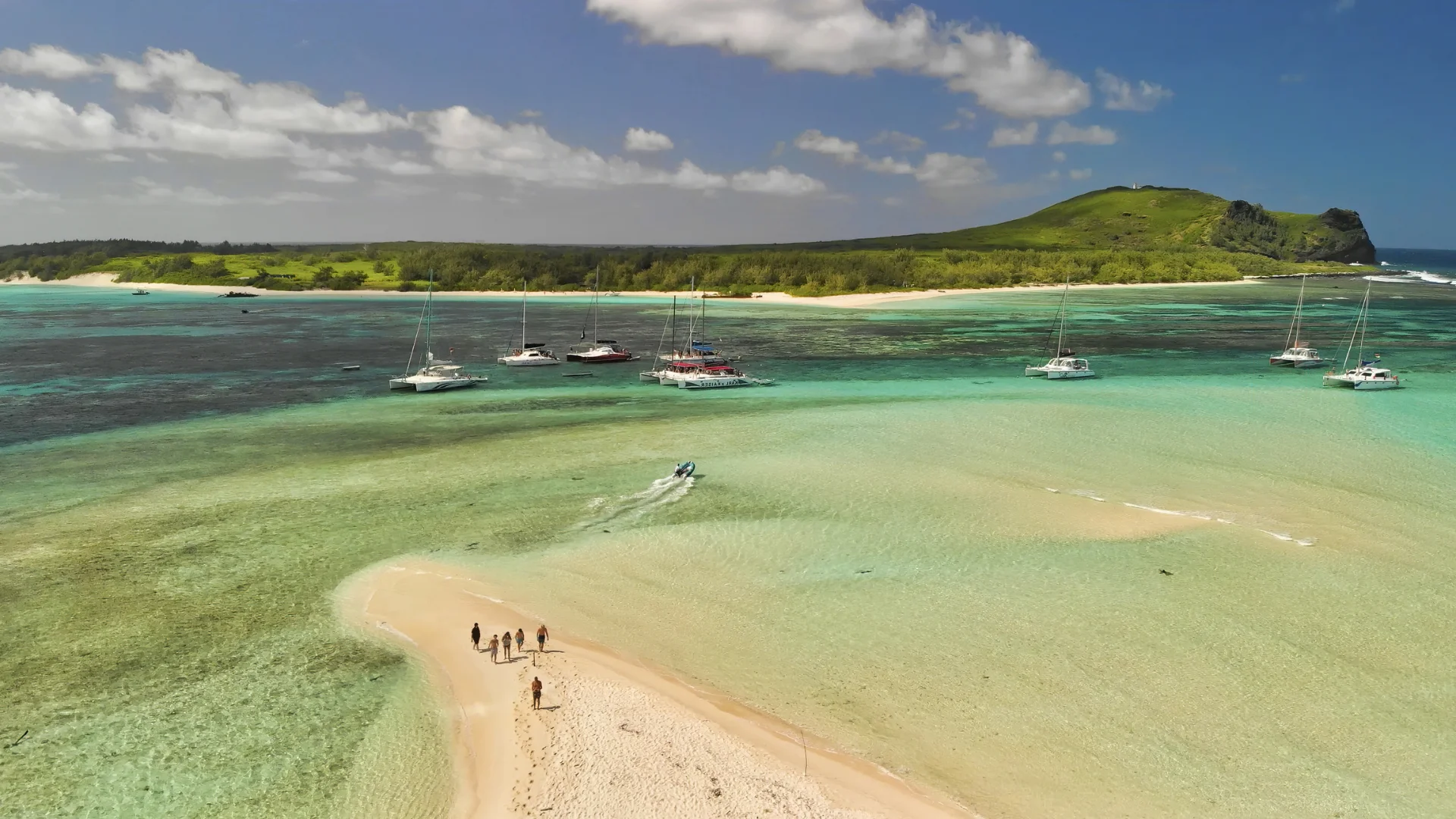
The usual second stop on the same cruise — a low, sandy island with a lighthouse, shallow water and room to swim.
Coin de Mire (Gunner’s Quoin), off Cap Malheureux, Rivière du Rempart District, Mauritius
DRIVE TIME
Around 30–45 minutes by boat from Grand Baie Approximately 10 minutes from Grand Baie to Cap Malheureux Around 45–55 minutes by road from Port Louis
GETTING THERE
There is no land access. Catamaran and speedboat trips leave from Grand Baie and the north coast; dive centres in Grand Baie and Pereybère run trips to the sites around the island.
From the French name Coin de Mire — the wedge a gunner slid beneath a cannon to adjust its elevation. Seen from the north coast, the island has exactly that tipped, wedge-like profile. The British translated the name directly.
Not on a standard trip. It is an uninhabited nature reserve protected for its seabirds and remaining dry coastal vegetation, and landing is restricted. Cruises sail around it rather than putting passengers ashore.
By boat only. Catamaran and speedboat trips run from Grand Baie and the north coast, taking roughly 30 to 45 minutes, and usually combine Coin de Mire with Flat Island and Gabriel Island.
Generally not. The sites around the island are among the best in Mauritius, but they sit on exposed flanks with real current and are better suited to intermediate and advanced divers. Book through a licensed centre and be honest about your experience.
It rises to roughly 280 metres, with sheer cliffs on the seaward side and dry scrub on the slopes facing Mauritius — which is why it dominates the horizon from every beach along the north coast.